
Here’s the answer you’ll get from most paving contractors: “15 to 20 years.”
Here’s the more complete answer: It depends on five things — and most contractors only control two of them.
A commercial asphalt parking lot in Davenport, Bettendorf, Moline, or Rock Island should absolutely last 20 to 25 years with proper installation and maintenance. Some well-built lots push 30 years. But plenty of parking lots in the Quad Cities — and across the Midwest — are failing in five to eight years. Not because asphalt is fragile, but because of specific decisions made during the bidding, installation, and maintenance process.
If you’re a property manager or commercial property owner planning a paving project, understanding these five lifespan factors will save you from becoming a cautionary tale.
Factor 1: Asphalt Mix Quality
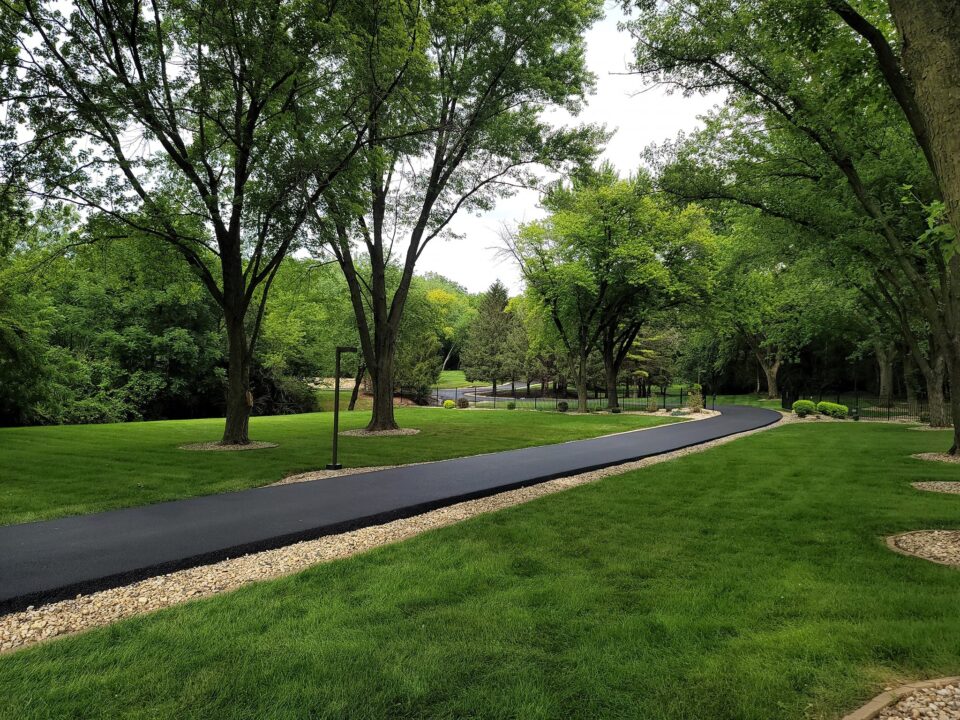
The asphalt mix is the foundation of everything. Hot mix asphalt is made of aggregate (crushed stone, gravel, sand) bound together by a petroleum-based binder. The ratio of those materials — the gradation, the binder content, the mixing temperature — determines how the pavement performs under load, how it handles water infiltration, and how long it resists oxidation and cracking.
The problem: most paving contractors don’t control their mix. They buy from whatever plant is selling that week, at whatever price makes their bid competitive. They have no visibility into binder content, no ability to specify aggregate quality, and no accountability when that mystery mix starts failing two years ahead of schedule.
Taylor Ridge Paving owns Superior Asphalt Plant. That single fact changes everything about material accountability. We design our own mix for Midwest commercial conditions. We know exactly what’s going into your parking lot. And when we stand behind our work, we’re not pointing fingers at a third-party supplier — because there isn’t one.
Factor 2: Base Preparation
Asphalt is only as strong as what’s under it. The subgrade (native soil) and the aggregate base course above it carry the structural load of every vehicle that uses your lot. If the base is improperly compacted, if soft spots aren’t identified and corrected, or if drainage isn’t properly engineered from the start, the asphalt above it will fail — regardless of quality.
Professional base preparation involves subgrade inspection, aggregate base specification, controlled compaction with proper equipment, compaction density testing, and moisture content verification before asphalt is placed. It adds time and cost to the project. It’s also the most frequently skipped step by low-bid contractors.
Factor 3: The Midwest Freeze-Thaw Cycle
This is the factor that makes commercial paving in Iowa and Illinois fundamentally different from paving in the South or Southwest.
The Quad Cities area experiences dozens of freeze-thaw cycles every winter. Water infiltrates the smallest surface crack. It freezes. It expands — with enough force to break concrete. It thaws. The crack is now larger. It freezes again. Repeat this cycle 40 to 60 times in a single winter, and a minor crack that should have been addressed in October becomes a structural failure by April.
The implication for property managers is this: a parking lot installed with the right mix, proper thickness, and excellent drainage will handle Midwest winters for decades. A lot installed with thin asphalt, poor compaction, and inadequate drainage can be failing within three to five years — regardless of what the contractor promised.
Proper drainage engineering — laser-guided grading that ensures positive slope and water flows away from the surface and the building — is not optional in this climate. It’s the difference between pavement that survives and pavement that doesn’t.
Factor 4: Asphalt Thickness
Industry standards for commercial parking lots call for a minimum of 2 to 3 inches of compacted asphalt surface course over a properly prepared base. High-traffic areas, loading docks, and lots that serve heavy trucks or delivery vehicles should be designed to greater thickness.
The thickness specified in a bid and the thickness actually installed are frequently not the same number — particularly with low-bid contractors. Asphalt is the most expensive material on the project. Shaving half an inch saves a contractor significant money and is virtually impossible for a property manager to detect without core testing.
A lot installed at 1.25 inches instead of 2 inches doesn’t just fail faster — it fails dramatically faster, because thin pavement cannot distribute vehicle loads properly and cracks under normal commercial traffic in just a few years.
Factor 5: Ongoing Maintenance
Even the best-installed commercial parking lot needs a maintenance program. The general schedule that extends asphalt life in Midwest conditions looks like this:
Years 1–3: Let the pavement cure. Inspect annually for early cracking.
Year 3–5: Crack filling. Address any isolated cracks before water infiltration begins. This is the highest-leverage maintenance investment you can make.
Year 5–7: Sealcoating. A professionally applied sealcoat protects the binder from UV oxidation, slows oxidation, and extends surface life. Sealcoating should be done every 3 to 5 years depending on traffic volume.
Year 10–15: Evaluate for resurfacing. If the base is sound but the surface shows widespread aging, a mill-and-overlay adds 10 to 15 years of life at a fraction of full reconstruction cost.
Year 20–25+: Assess for full reconstruction if base integrity is in question.
Property managers who follow this schedule — and who started with quality installation — routinely get 25 years or more from a commercial parking lot. Those who skip maintenance and started with a low-bid installation are looking at full replacement before year ten.
What Good Pavement Costs Over Time vs. What Cheap Pavement Costs
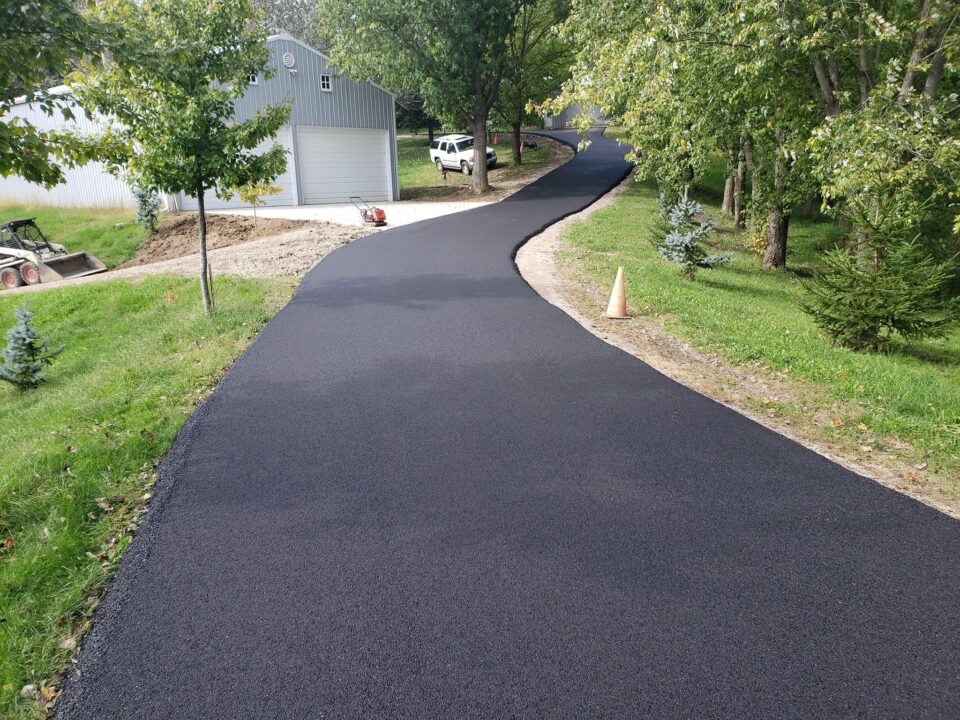
The 5-year math on a typical commercial lot, using real numbers:
Professional installation: $95,000 upfront. $2,000 in maintenance over five years. Total: $97,000.
Low-bid installation: $64,000 upfront. $8,000 in emergency patching over three years. Full replacement at year four: $110,000. Total: $182,000.
The “savings” evaporated — and then some. This scenario plays out constantly throughout the Quad Cities and the broader Midwest commercial real estate market.
Serving the Quad Cities Since 2011
Taylor Ridge Paving & Construction has been building and maintaining commercial parking lots for property managers, shopping centers, school districts, healthcare facilities, municipalities, and industrial facilities throughout Davenport, Bettendorf, Moline, and Rock Island since 2011.
We own Superior Asphalt Plant — which means we control the mix quality from aggregate to final placement. We operate seven crews with full equipment redundancy. And we’ve been in business under the same name long enough that you can check our work from five, ten, even fifteen years ago.
That’s accountability you can drive on.
Serving Davenport, Bettendorf, Moline, Rock Island, and the greater Quad Cities region.